Giving AI coding agents the signals they need to write high-quality code
D’oh! My Coding Agent
Has No Eyes
Jon Abbott
I’ve outsourced most of my coding
- Gemini CLI, GitHub Copilot, Cursor
- SpecKit / SDD and native plan modes
- Different models, different harnesses
- And the output is… surprisingly good
But… nits
- IDE warnings and amber squiggles
- Style drift and small code smells
- Patterns that don’t fit the codebase
- If my IDE is showing amber, I’m not happy
Something felt… different
- Work with someone long enough and you learn their style
- Quirks, strengths, how much detail they need
- You develop a working relationship
Agents didn’t feel like teammates
Human teammate
You get used to
- One person’s style
- Predictable quirks
- A working relationship
Agents
Every run can shift
- Model and harness
- Context and plan
- Lots of teammates
D’OH!
The agents don’t use an IDE.
They don’t have eyes.
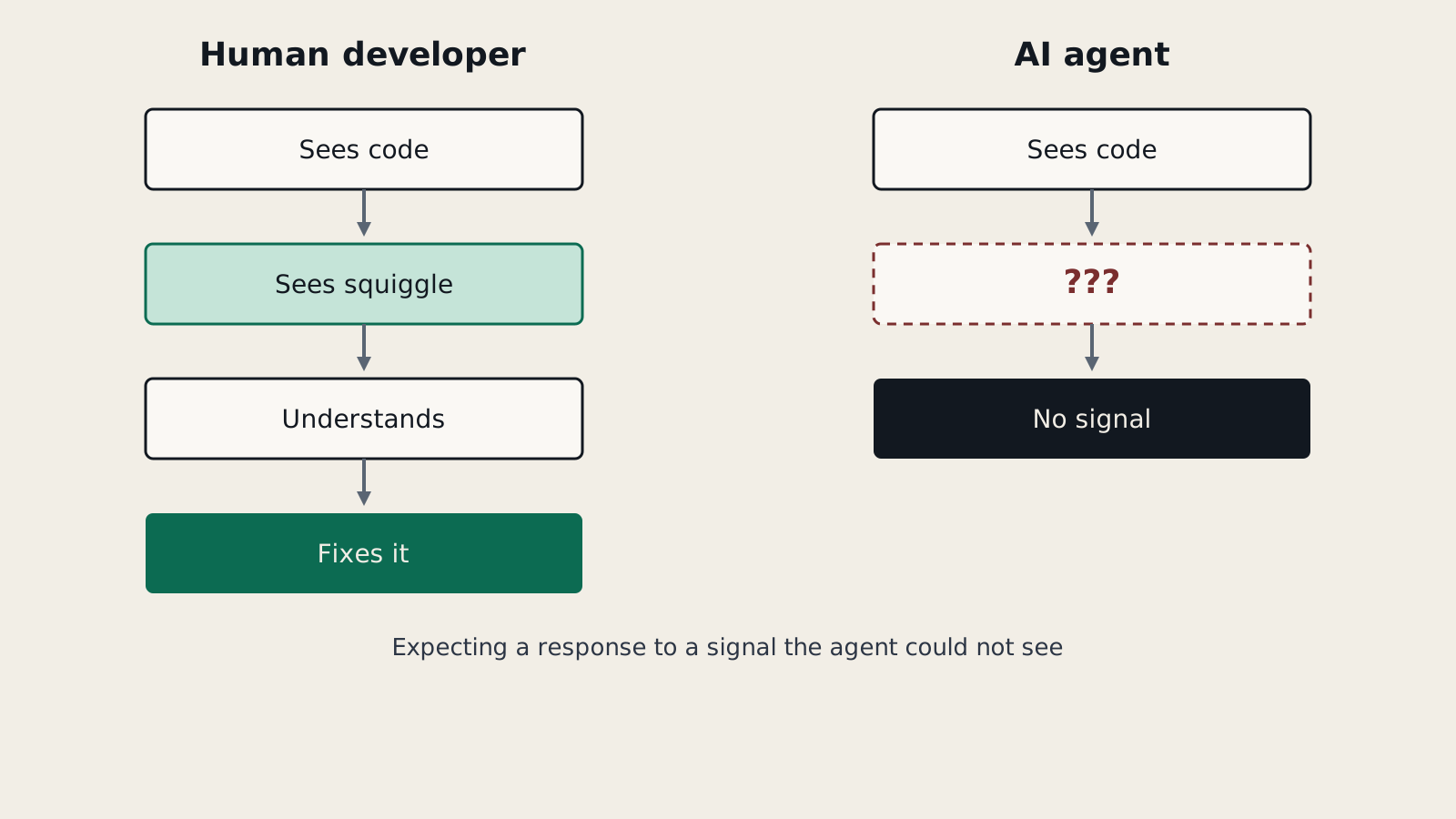
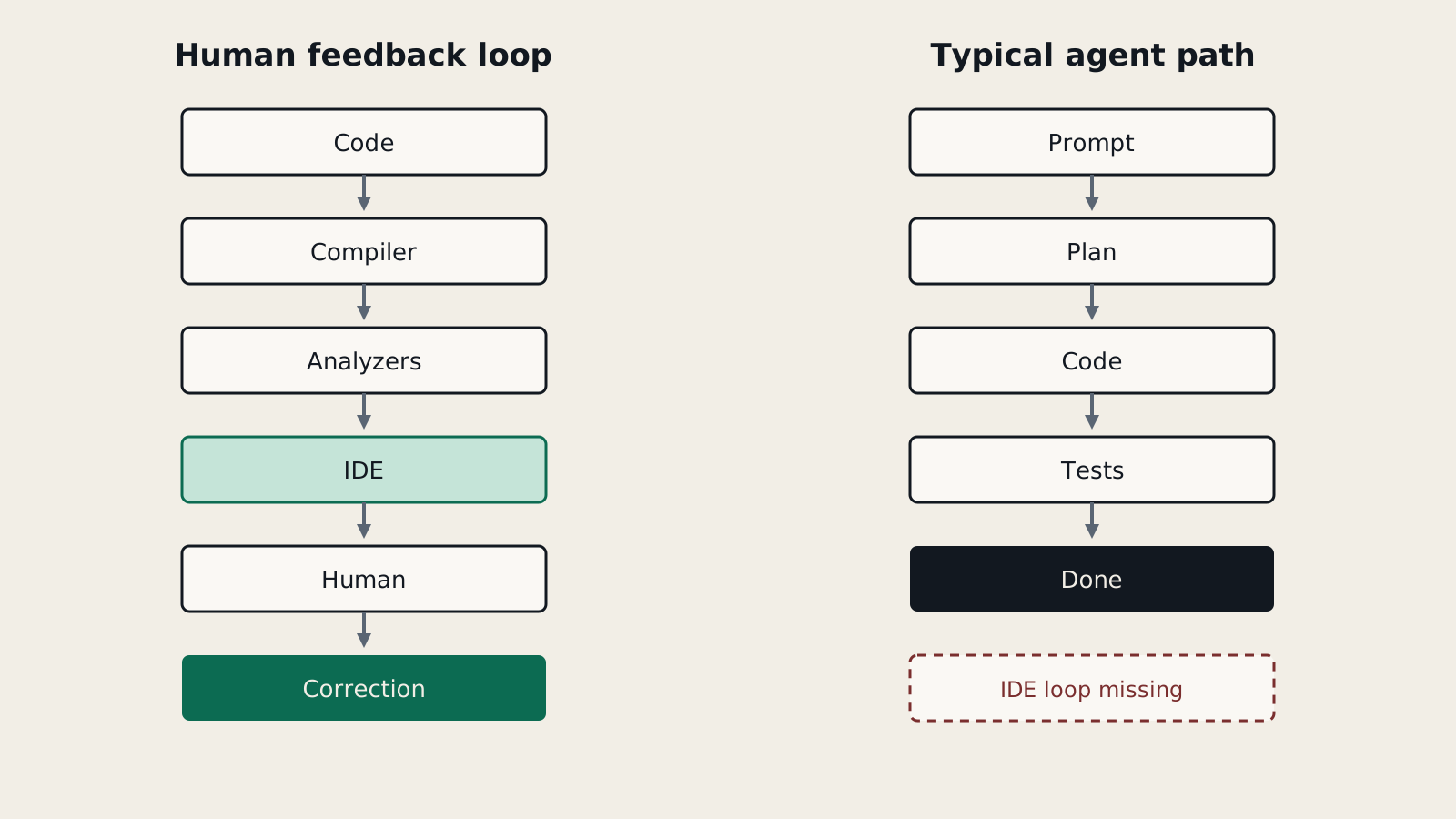
So how do we give the agent the signal?
Make preferences executable
.editorconfig-
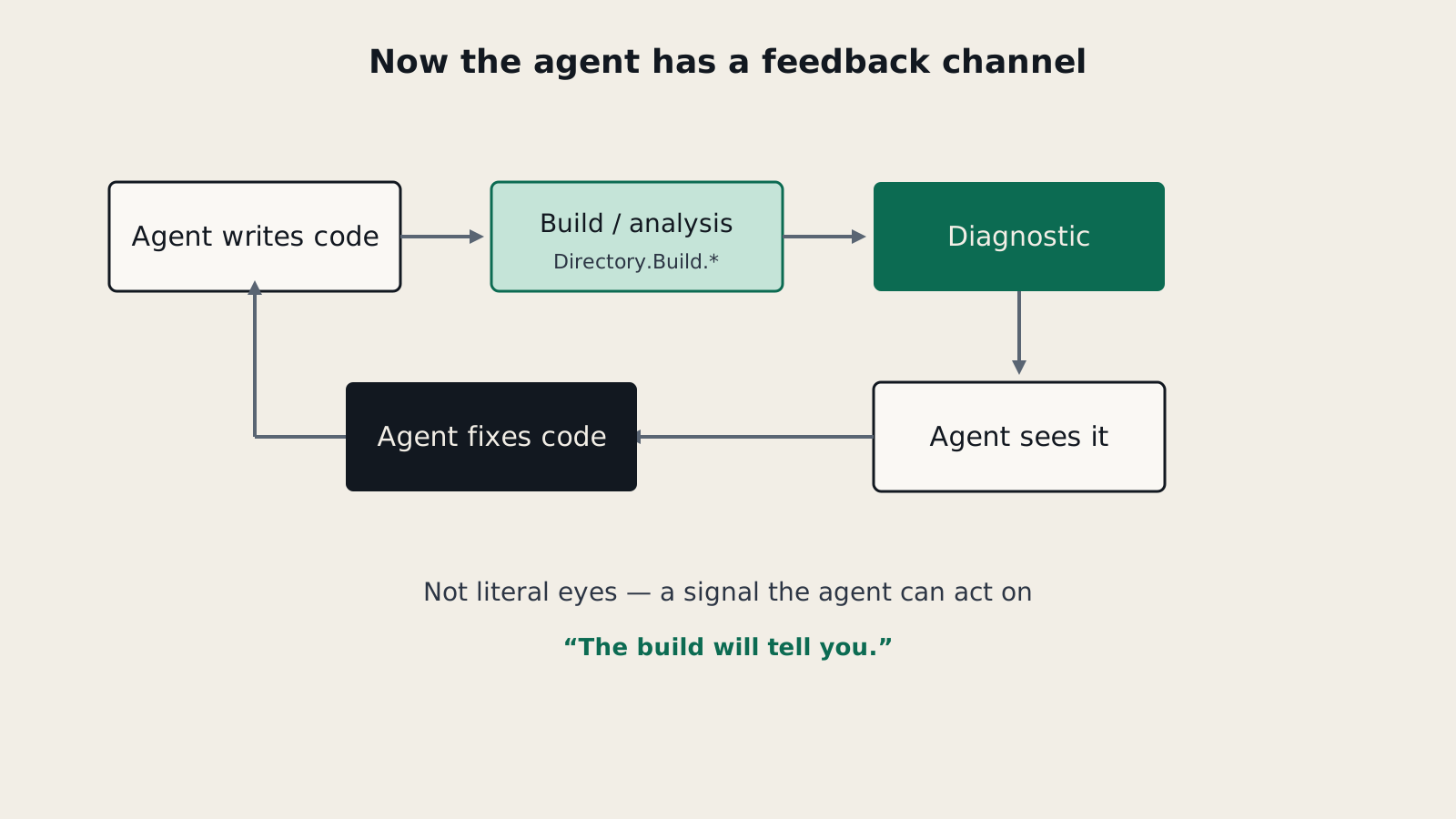
Directory.Build.props/Directory.Build.targets CodeMetricsConfig.txt- These aren’t just config files. They’re signals.
From tribal knowledge to rules
Human team
Knowledge lives in
- “We generally don’t do that”
- “The IDE will warn you”
- People
Agent
Knowledge needs to live in
- Build and analyzers
- Metrics and style rules
- Artifacts
.editorconfig
- Naming, whitespace, language conventions
- Analyzer severity and style rules
- Don’t tell the agent what good looks like — give the toolchain a way to tell the agent
CodeMetricsConfig.txt
- Quality isn’t only “does it compile?”
- Complexity, maintainability, coupling, size
- The compiler says valid. Metrics can say getting ugly.
An observable quality function
- Tests — does it work?
- Compiler — is it valid?
- Analyzers — does it follow these rules?
- Metrics — is it hard to maintain?
- .editorconfig — what does consistency look like here?
Agents don’t learn like teammates
Human team
- Teach
- Feedback
- Learn
- Trust
Agentic development
- Specify
- Signal
- Detect
- Correct
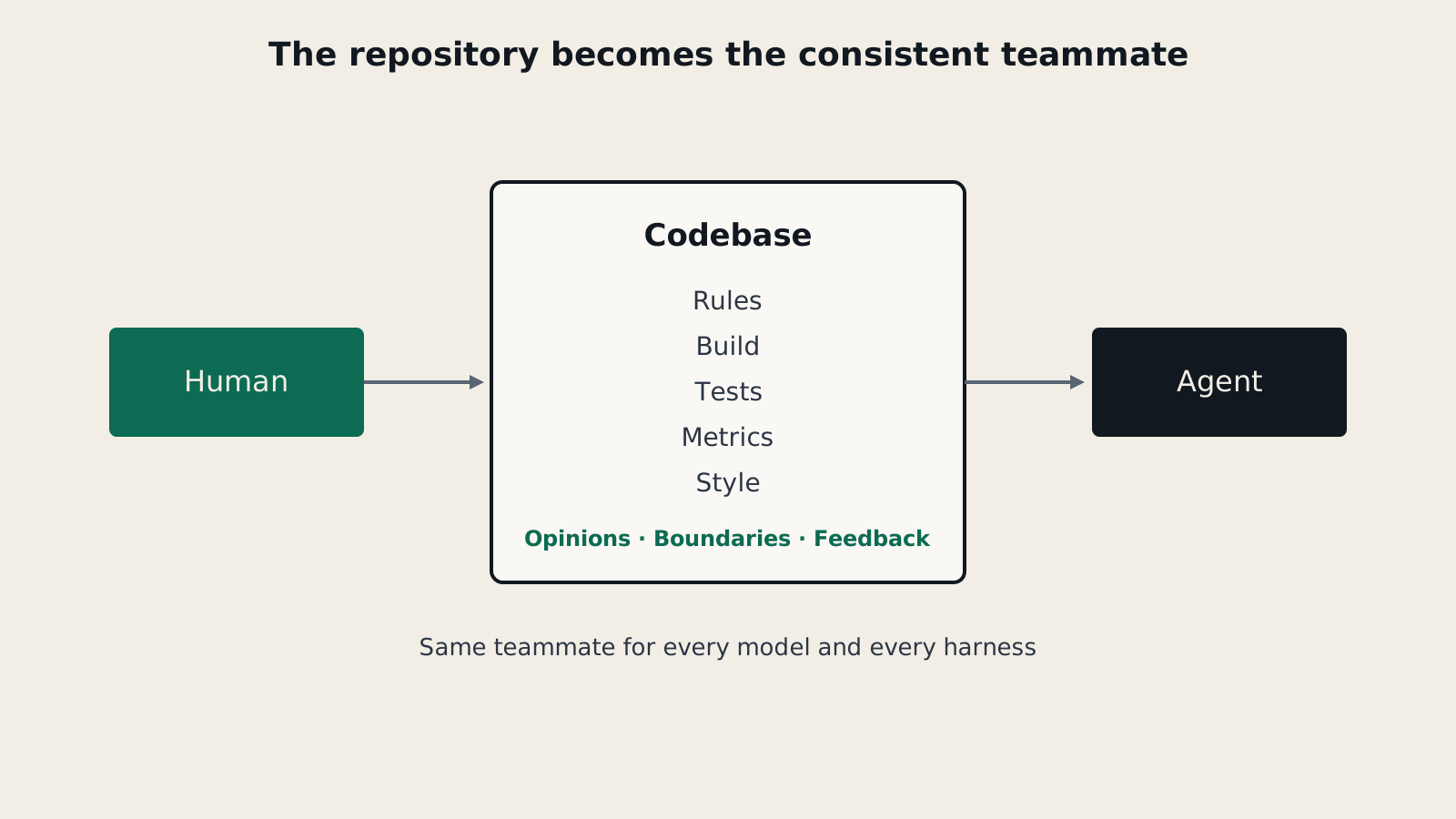
Don’t make the agent remember your quality bar. Make the repository remember it.
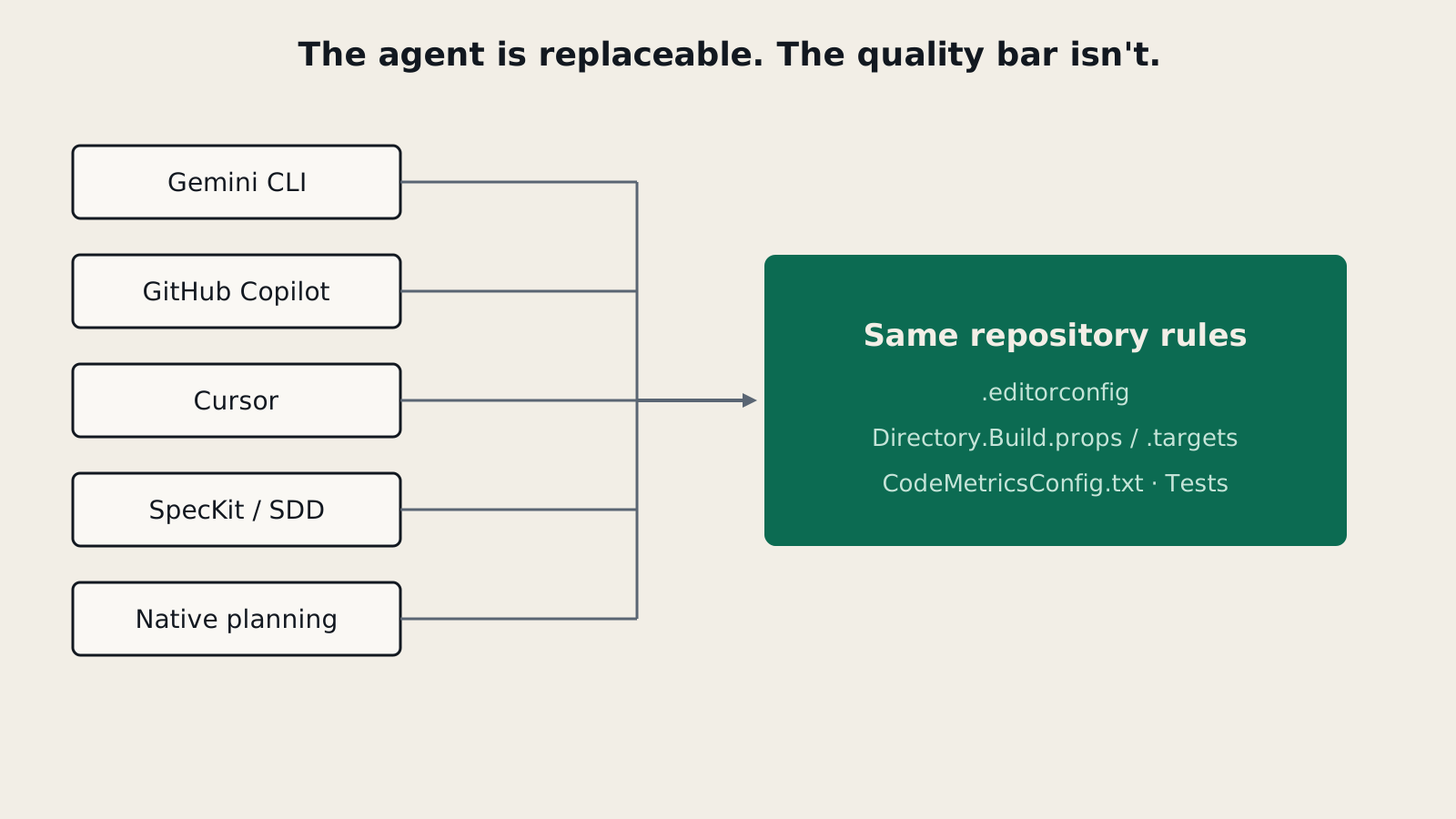
What I changed
Before
- Prompt → agent → code
- Human review
- “Why is there a warning?”
After
- Build + analyzers + metrics
- Agent sees diagnostics and fixes
- Human reviews design
The result
- Agents didn’t suddenly become better programmers
- They became better informed programmers
- The quality bar was already there — it just wasn’t exposed
AI coding agents don’t have eyes.
Give them signals.
Make quality machine-readable.
github.com/jrabbott